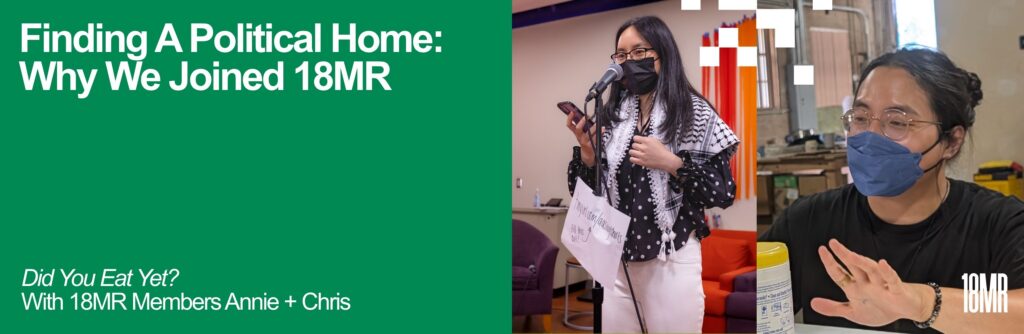
September marks 18 Million Rising’s anniversary! As we enter our 14th year of existence, we’re celebrating our work as a base building member-led organization. From organizing online, to on the streets, hear from our members about their journey with 18MR:
Annie: Hi all! I’m Annie, and I live, work, and dream in New York City where I joined 18MR. In my search for a political home, I was trying to understand my place as an Asian American in the struggle against capitalism, imperialism, white supremacy and anti-Blackness, and cisheteropatriarchy.
I was drawn to 18MR after spending a lot of time in college organizing for Asian American Studies. That experience shaped my understanding of theories around race, identity, and power. And it also pushed me to grapple with what it means to build a community around a shared vision of change—and to change as a person in pursuit of a better world.
chris: Hi~ this is chris! I’m a queer Asian American writer, artist, and independent humanities researcher based in the occupied lands of Arapaho, Cheyenne, and Ute (Denver, CO). As a diasporan of sorts, my living and financial conditions found me unable to consistently participate in my local political spaces. And so, I joined 18MR for its accessibility.
And I’m staying for the people and their politics. I continue to learn from and with them about navigating this conjuncture of Asian America as organizers. Through principled struggle, it’s been my political home since.
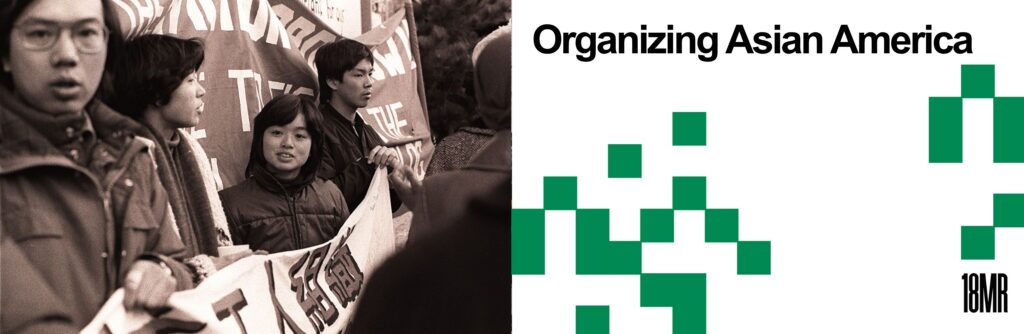
Annie: After October 7, after COVID, after George Floyd, I thought it was important to be part of an organization. We were seeing leftist movements in America have been rendered fractured and impotent. As conditions worsen in the United States and as American imperialism digs its talons deeper into the flesh of the rest of the world, leftists in the imperial core are struggling to build a mass movement with real teeth.
We Asian Americans inherit a rich activist history from previous generations in the diaspora and in our homelands.Yet Asian Americans today are under-organized and under-politicized. We are in a moment that demands not just action, but also clear-eyed understanding of the reactionary and fascist forces that define our era. How are we complicit in America’s crimes? What is our role today in the fight for liberation? We need to answer these questions.
chris: 18MR membership comes from a larger historical ecosystem of leftist activists and organizers who have constantly struggled with the fickleness and cunningness of liberalism. Its liveliness runs so thick in our day-to-day that what feels like nowhere leaves us no choice but to be elsewhere—where we fall and find each other to commit to organizing.
That is, organizing is important to resist the forces of authoritarianism that make up fascism and imperialism because our social movements and organizations are the remnant reminders of liberation in-the-making. These elsewheres—abolitionist, crip, Black, Indigenous, queer, trans, feminist, migrant, refugee—have always held minute yet infinite ways of breaking and remaking us so that we can hold each other and our world ever closer.
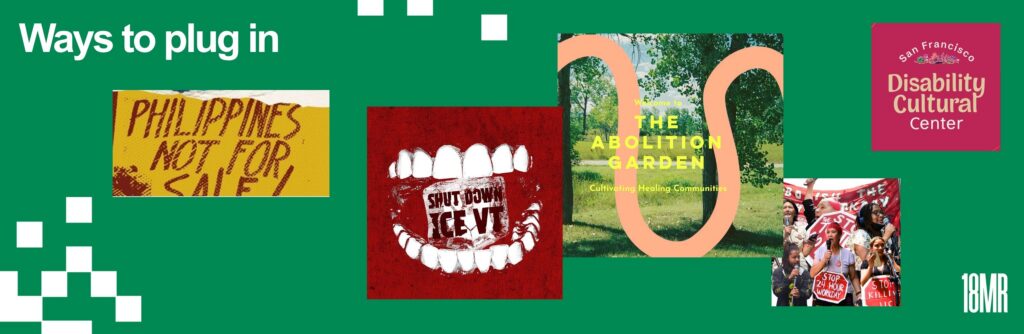
Annie: Some Asian organizations and issues I’m watching in NYC:
1. Go on a walking tour in Manhattan of properties formerly owned by the Marcos family and the headquarters of companies behind Pax Silica
2. Take a minute to email Mayor Mamdani that we don’t want a casino in Queens with the No Casino campaign
3. and join the call to end the 24-hour-work day!
Recently, I’ve been putting more time into learning Chinese and improving my ability to read, write, and speak the language. For many Asian Americans, especially 2nd+ generation, language can be one of the biggest barriers towards intergenerational, transnational, and working-class solidarity. If we want to build stronger movements, we need to be multilingual. The best time to learn a language was when you were an infant, the second best time is today!
chris: Below are some spaces and resources that I’ve come across, during my (digital) travels, for capacity-building, cultivation, and collective action. To name some:
1. San Francisco Disability Cultural Center (In-person/Virtual)
2. Those in healing justice, Yarrow Collective has an Alternatives to Suicide Facilitator Training coming up if you’re in Northern Colorado.
3. Tend to the Land and feed the people by joining urban farms like The Abolition Garden (Denver, CO) and Fennigan’s Farms (Detroit, MI).
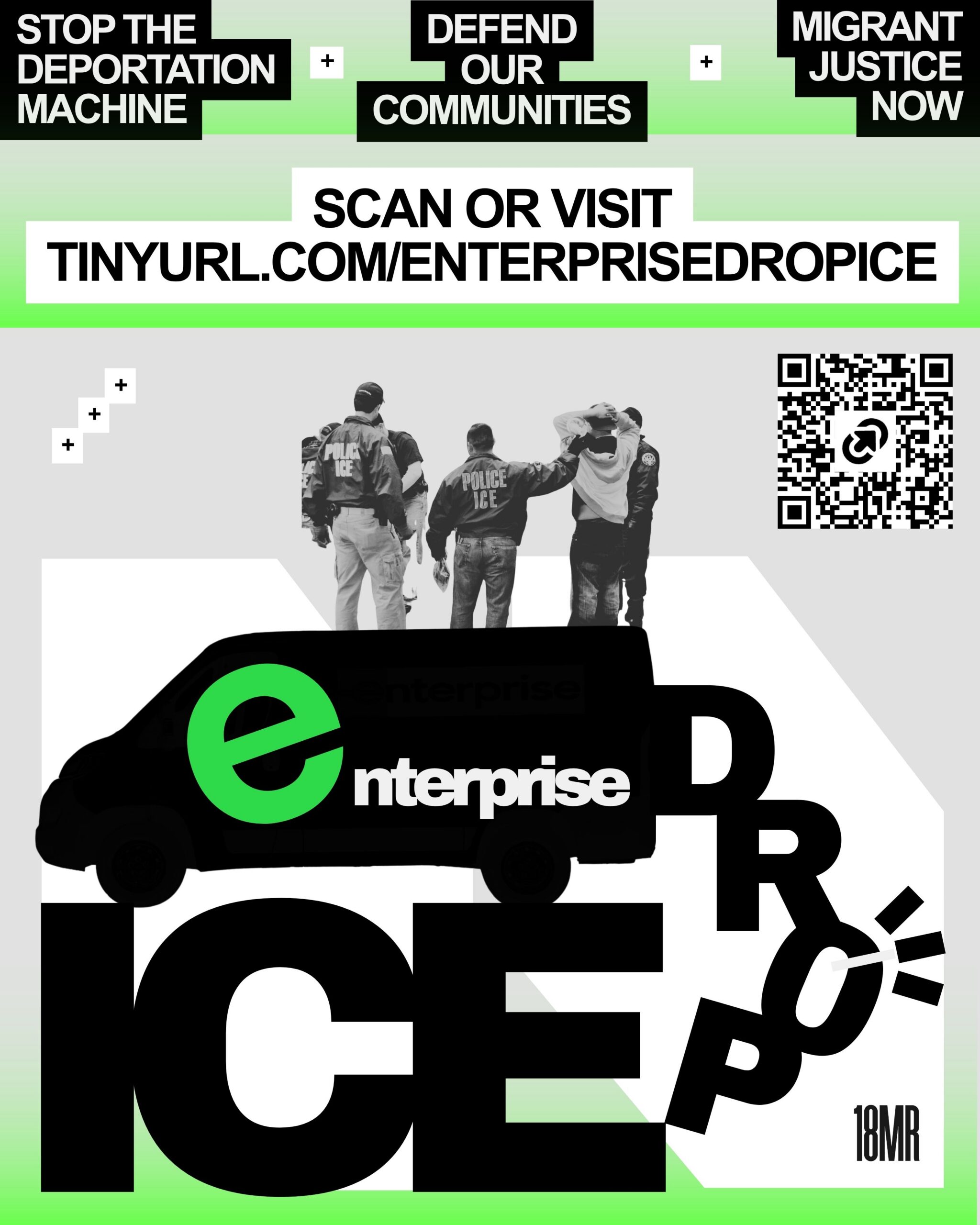
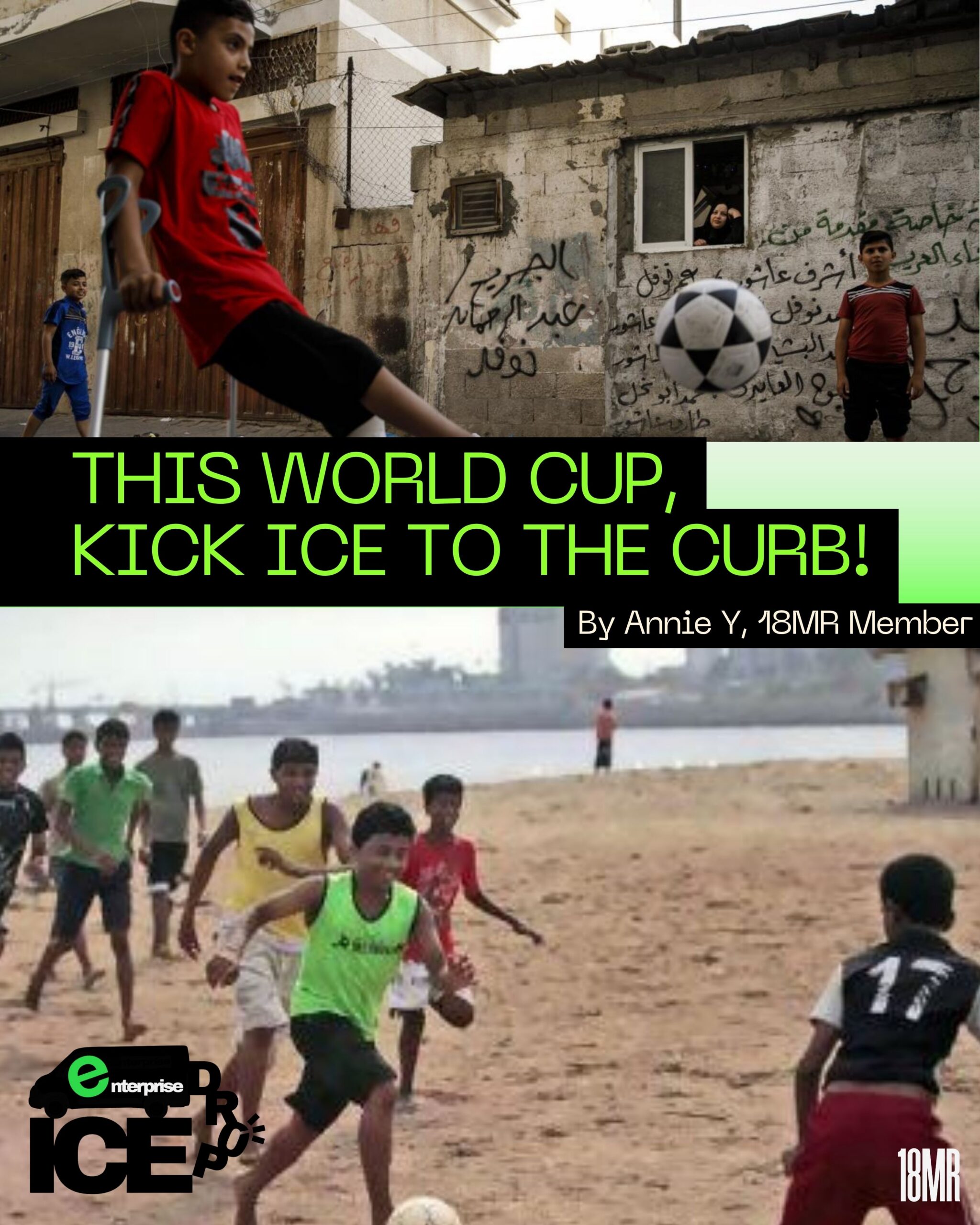
4. Hate ICE? Jump into our Enterprise campaign to stop their collaboration with ICE or join Vermont for a Week of Action to shut down ICE!
5. And lastly, it’s been almost 1 year since Yaakub was detained for speaking out against the genocide in Palestine. Take action with us and let’s Free Yaakub.
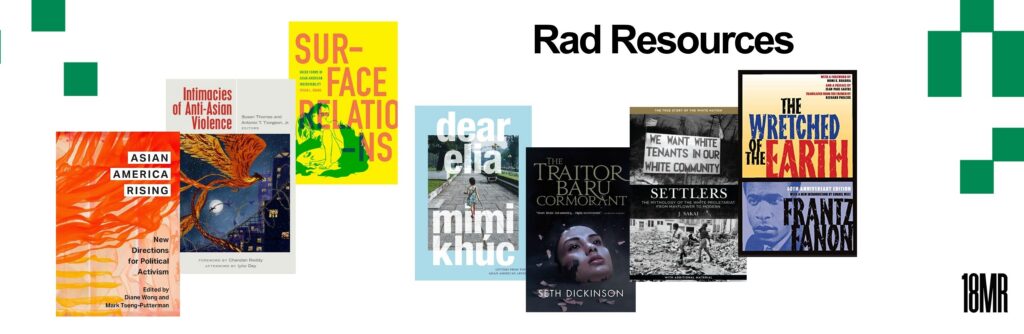
Annie:
1. The Wretched of the Earth by Frantz Fanon: In addition to the chapter “On Violence”, I think “On National Culture” demands some critical self-reflection from Asian intellectuals, artists, and creatives in the diaspora.
2. Settlers: The Mythology of the White Proletariatby J. Sakai: One of the few canonical (if not controversial) works of the American left written by an Asian American. It’s worth asking how Sakai’s position as a Japanese American influences his critique of the white proletariat, and asking the same of our own positions in relation to white supremacy, Indigenous dispossession, and anti-Blackness.
3. The Traitor Baru Cormorant by Seth Dickinson: A stunning 10/10, anti-imperialist, queer, feminist novel about a woman trying to overthrow an empire from within and the price she must pay to achieve her goals.
chris
1. Asian American Rising: New Directions for Political Activism – eds. Diane Wong and Mark Tseng-Putterman: An anthology of life-giving, world-building work across different lives and lifetimes to sustain and forward the intersections of contemporary Asian American activism. (We’re featured in there :)!)
2. Intimacies of Anti-Asian Violence – eds. Susan Thomas and Antonio Tiongson: A sharp, vivacious volume untangling the multiple dimensions that shape anti-Asian violence through critical engagements of scholarship, movement work, and art.
3. Surface Relations: Queer Forms of Asian American Inscrutability – Vivian Huang: Less is more.
dear elia: Letters from the Asian American Abyss – Mimi Khúc: A well-reminder, from our current and/or student lives, that we are all differentially unwell.
4. AORTA’s Democratic Decision Making Zine – For those who need some more support and structure in their organizing and governance to make sure no one gets left behind.
In Solidarity,
– Annie & Chris + Leyen, Sharmin, Sunee, Sonia, Turner, Van, Allison, & Irma – the 18MR Team