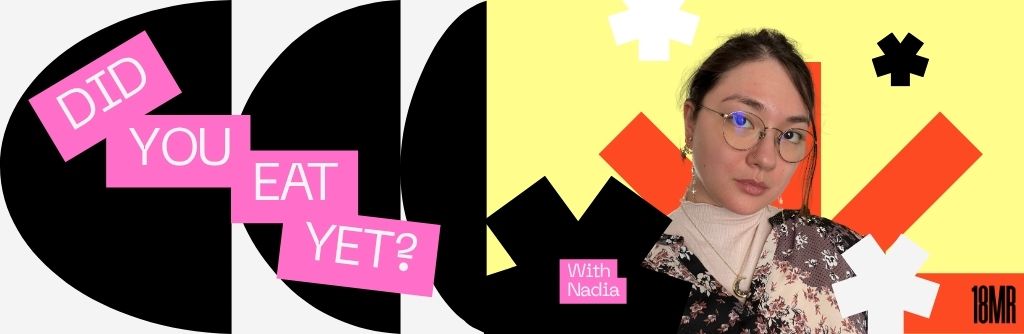
Hello everyone, my name is Nadia, or Na-di (나디) in Korean. I am a mixed race queer disabled artist and an officiated mudang apprentice on Dena’ina and Ahtna Lands, Alaska!
People might recognize me for my art, which I have been professionally doing for nearly a decade. Since spring of 2025, however, my focus has been on my mudang practice and duties (though the art has become even more present since then in some ways). For those who don’t know, a mudang is a Korean shaman-priest/ess/x, and fun fact—many of us are queer and/or disabled!
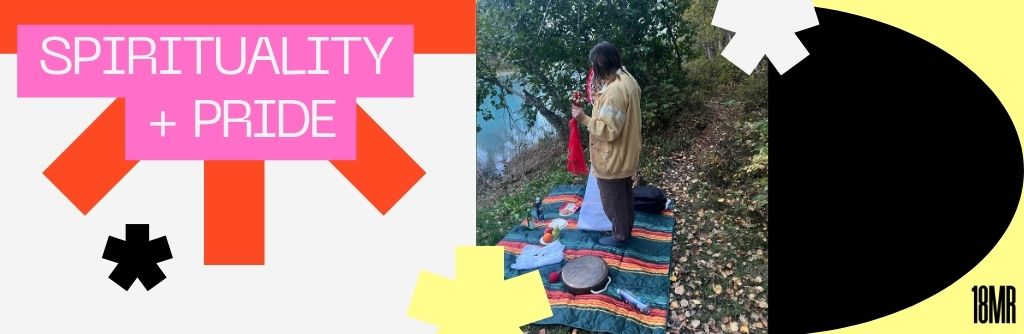
We’re in the midst of Pride month! It is a time full of so many feelings—joy, resistance, and, at times, deep pain. I hold deep space for all of my queer siblings, and for the fact that the mudang community has always been and will always be full of LGBTQIA+ people—out and not.
Mudang can hold various titles: mudang, baksu (male shaman-priest), manshin (reserved for shamans who’ve been practicing 10-20+ years, depending on lineage), and so on. This is the indigenous form of spirituality of the Korean people. Over the years, it has been demonized. During the Joseon dynasty (due to neo-Confucianism), mudang were at the bottom of the social hierarchy, along with sex workers, innkeepers, butchers, etc.
This was due to many factors: most mudang are women or femmes, trans and/or queer, and many are disabled. Time and time again, people have tried to destroy this practice by erasing our cultural practices and spirituality. This was also true during the latest Japanese occupation of Korea, where Japanese Imperialists tried to erase our language, history, nature, and culture. And even though things seem to be turning around in recent times, the Korean government has demonized the practice. Mudang lineages have adapted to keep our practices alive time and time again.
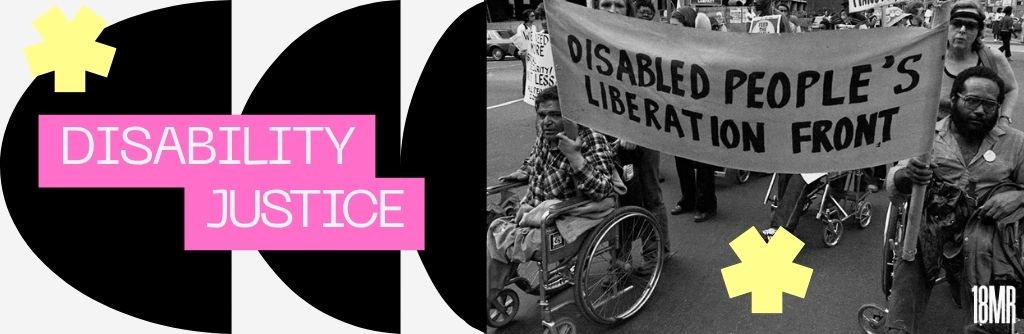
We are celebrating and fighting for a lot right now, and we can’t touch on Pride without disability justice. There is a lot of intersection between the two! Right now, disabled and LGBTQIA2S+ people and communities are being targeted and attacked by harmful groups and systems—including the U.S. government. This isn’t new, but the attacks have escalated.
I’m sure none of us have forgotten about all the anti-mask propaganda. Many of us are feeling the weight of our healthcare systems failing us as they focus on profit over people. COVID never ended as much as so many people chose to move on when it didn’t directly affect them anymore. Even as new variants spread. So, what can we do? A few things!
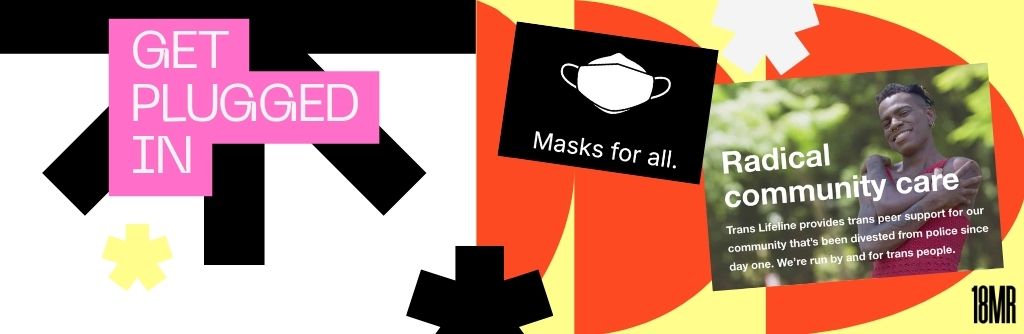
Looking to make sure people in your community can access masks, COVID tests, and similar resources? One big thing you can do is donate to or even volunteer with your local maskbloc! Here is a link to a worldwide maskbloc directory.
Trans people are actively being criminalized. The U.S. government is spreading misinformation and hateful rhetoric. They’ve signed executive orders that deny the existence of trans people. They’ve presented bills that harm trans youth and adults. With fewer resources to support trans organizations, I encourage folks to support TransLifeline, a hotline that provides support for our trans community without police. And take a minute to send a message to protect trans youth healthcare.
We all have different capacities and abilities—do what you can where you can. As an immunocompromised person, my capacity is often low. When I feel guilty I’m not doing more, I remember this great analogy about activism and organizing. Those long notes you hear a choir sing are only possible because “group A” sings while “group B” prepares. Then group A takes a break while group B continues the note. To the listener, it sounds like one long, seamless note held for an impossibly long time. But to the choir, they are working together in intervals to sustain the entirety of the group. So finally, I leave you with one last task: figure out how to work in intervals with your community and come up with methods together that allow for rest while the work continues.
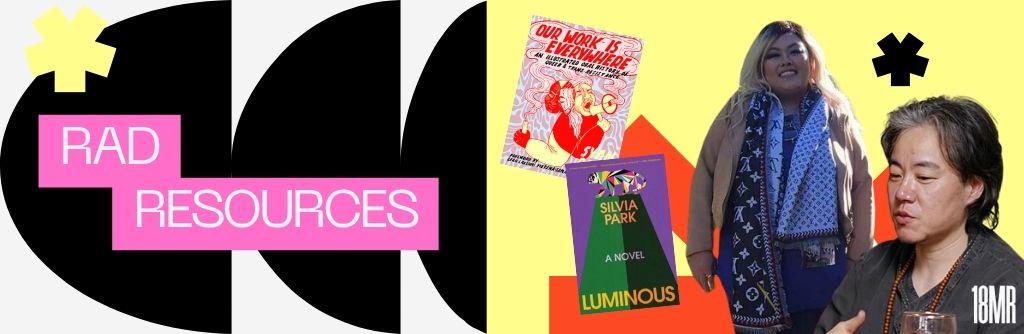
- I found “Our Work Is Everywhere: An Illustrated Oral History of Queer and Trans Resistance” by Syan Rose inspiring and beautiful. I checked it out from my library (remember to support your local libraries!) and it is one I’d like to read again.
- How’s a queer, disability pride fiction book set in a reunified Korea sound? “Luminous” by Silvia Park was a very interesting read—one I’d like to read again to fully absorb all the elements it touched on. It’s a perfect time to read it anytime, but an especially great read for this time of the year!
- If you want to learn more about mudangs and Korean folk practices, my spirit mother, Mudang Mi, has two interviews with the amazing Hmong shaman, Tassie Yang. You can click here for episode 1 and here for episode 2. I loved hearing the similarities and differences in Korean and Hmong spiritual practices.
- This short video produced by Korean American Story is one I find comforting, and it’s so short I can just pull it up every so often as a good reminder.I agree with Mudang Park Sung—our ancestors just want to be seen, too!
In Solidarity,
– Nadia & Leyen, Sharmin, Sunee, Sonia, Turner, Van, Allison, & Irma – the 18MR Team